
The ground is shifting under the Texas real estate market. If you plan to buy a home starting January 1, 2026, the experience will be noticeably different from what your friends or family went through. The old ways of casually calling an agent from a yard sign for a spontaneous tour are officially a thing of the past.
New statewide regulations have redrawn the map for how homebuyers and real estate agents must interact.
While the phrase “new laws” can sound complex, these changes are built to be your shield. They act like installing bright, clear street signs in a neighborhood that was once confusing to navigate. They bring much needed clarity to who is on your team, what they are hired to do, and how they are paid. This guide is your compass for understanding the new rules and what to expect on your homebuying journey.
Key Takeaways
Which law is discussed here?
This post breaks down Texas Senate Bill 1968 (Texas Legislature Online – SB 1968,) a law that includes amendments to the Occupations Code. We are focusing on Section 1101.563, which establishes that a WRITTEN AGREEMENT IS REQUIRED before an agent can provide services. This law took effect on January 1, 2026.
Who is affected?
Homebuyers: You must now sign a written agreement before an agent can show you a home or help you write an offer.
Real estate license holders: Agents and brokers are legally required to have this signed agreement with you before they can start working on your behalf.
Who is not affected?
These new rules do NOT apply to sellers, commercial property deals, or raw land transactions.
Where can you find the Section 1101.563?
You can access Section 1101.563 within the Texas Occupations Code on the official Texas Legislature website (capitol.texas.gov): statutes.capitol.texas.gov → Occupations Code → Chapter 1101 → Section 1101.563
https://statutes.capitol.texas.gov/?tab=1&code=OC&chapter=OC.1101&artSec=1101.563
What is in the Law: Key Provisions of SB 1968
Mandatory Written Agreements – Occupations Code, Section 1101.563
License holders must now enter into a written agreement with a buyer before they can show a residential property or make an offer. You cannot tour a home with an agent without first signing a document that defines your relationship. This ensures clarity regarding duties and compensation from the very first meeting.
Elimination of Subagency
The new law removes “subagency” entirely. Previously, an agent could help a buyer while legally representing the seller. This caused confusion about loyalty. Now, an agent either represents you, represents the seller, or acts as an intermediary. The lines of representation are absolute.
“Showing Without Representation” Option
If you want to view a home without hiring an agent, you can. A broker may show a property without a representation agreement, but they must provide a specific written notice in at least 10-point font. This notice states the broker does not represent you. During these showings, the broker cannot offer advice, opinions, or negotiation help.
Negotiable Compensation Disclosure
Written agreements must now conspicuously state that broker compensation is fully negotiable. The documents will clarify that commission rates are not set by law, ensuring you understand that fees are a matter of contract between you and your broker.
Broker Education Requirements
All brokers, even those who do not sponsor other agents, must complete the Broker Responsibility Course to renew or apply for a license. This ensures every broker remains up to date on compliance and legal standards.
Enhanced Oversight
The Texas Real Estate Commission (TREC) now has expanded authority to manage license information. This includes publicly displaying the names of associated brokers and requiring updated business contact details, making it easier for the public to verify agent credentials.
Visit Texas Legislature Online to read the full text of Senate Bill 1968. Texas Legislature Online – SB 1968,
Section 1101.563 Explained: Written Agreement Required Before Showing a Property
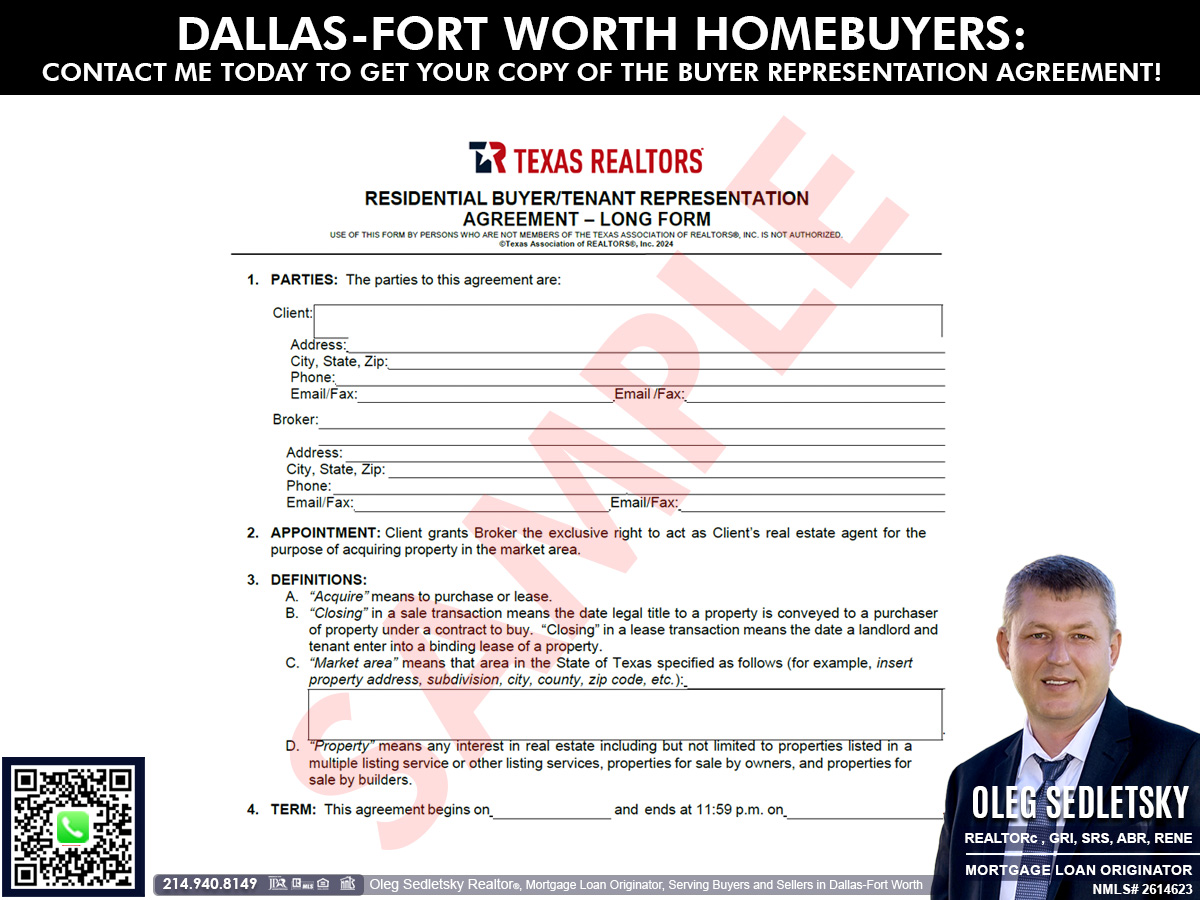
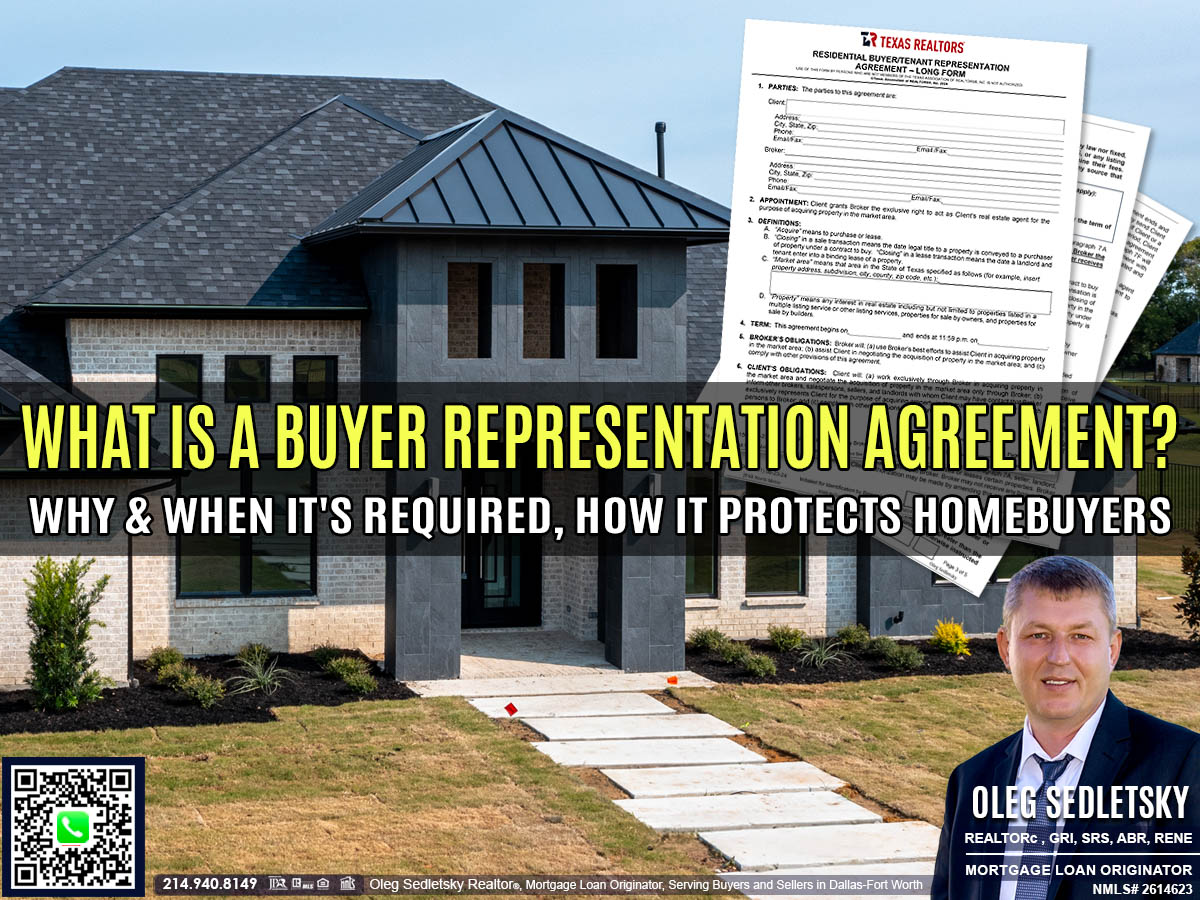
The most immediate change you will encounter happens before you even set foot inside a potential new home. The new law mandates that a real estate professional must have a signed written agreement (Buyer Representation Agreement) with you before showing you a residential property. This includes single-family homes, duplexes, condos, and co-ops.
Previously, an agent might have offered a “try before you buy” approach, showing you a few homes to build rapport before presenting a contract. Now, the law moves that paperwork to the very beginning of the relationship. If you ask an agent to show you a home and they present a document to sign first, they are not being pushy; they are complying with Texas law.
This agreement is far more than a formality. Think of it as the blueprint for your entire homebuying project. It must clearly outline several key points:
- The specific services the agent will perform for you.
- The exact details of the agent’s compensation.
- A clear distinction on whether the agent is your dedicated representative (“Full Service”) or is simply providing access to a property (“Showing Only”).
- An upfront statement confirming that real estate fees are not set by law and are fully negotiable.
“Just Looking” vs. Hiring a Dedicated Agent
The new rules create a clear fork in the road, requiring you to choose your path when you want to see a property.
Path 1: The “Showing Only” Route
If you are not ready to commit to an agent but want to tour a specific house, the law permits a broker to unlock the door for you without officially representing you. This path, however, comes with significant limitations. The broker can only provide basic, factual information, like the home’s square footage or the seller’s asking price. They are forbidden from offering advice, opinions on value, or negotiation strategies.
This person is like a museum guard. They can let you into the gallery and point you toward the exit, but they cannot explain the art’s history or tell you if a painting is a wise investment. An agreement for this limited service cannot last more than 14 days and must be non-exclusive, so you are free to work with others. This option is fine for casual browsing, but it is vital to remember the person opening the door is not on your team.
Path 2: Full Buyer Representation
If you want an expert in your corner to provide guidance, negotiate fiercely on your behalf, and offer professional advice, you will sign a buyer representation agreement. This document establishes a formal agency relationship where the agent owes you fiduciary duties. This is a legal promise to put your best interests above all else. You are no longer just looking at houses; you have hired a dedicated professional to advocate for your success.
Why Working With a Realtor® Holding an ABR® Designation Matters
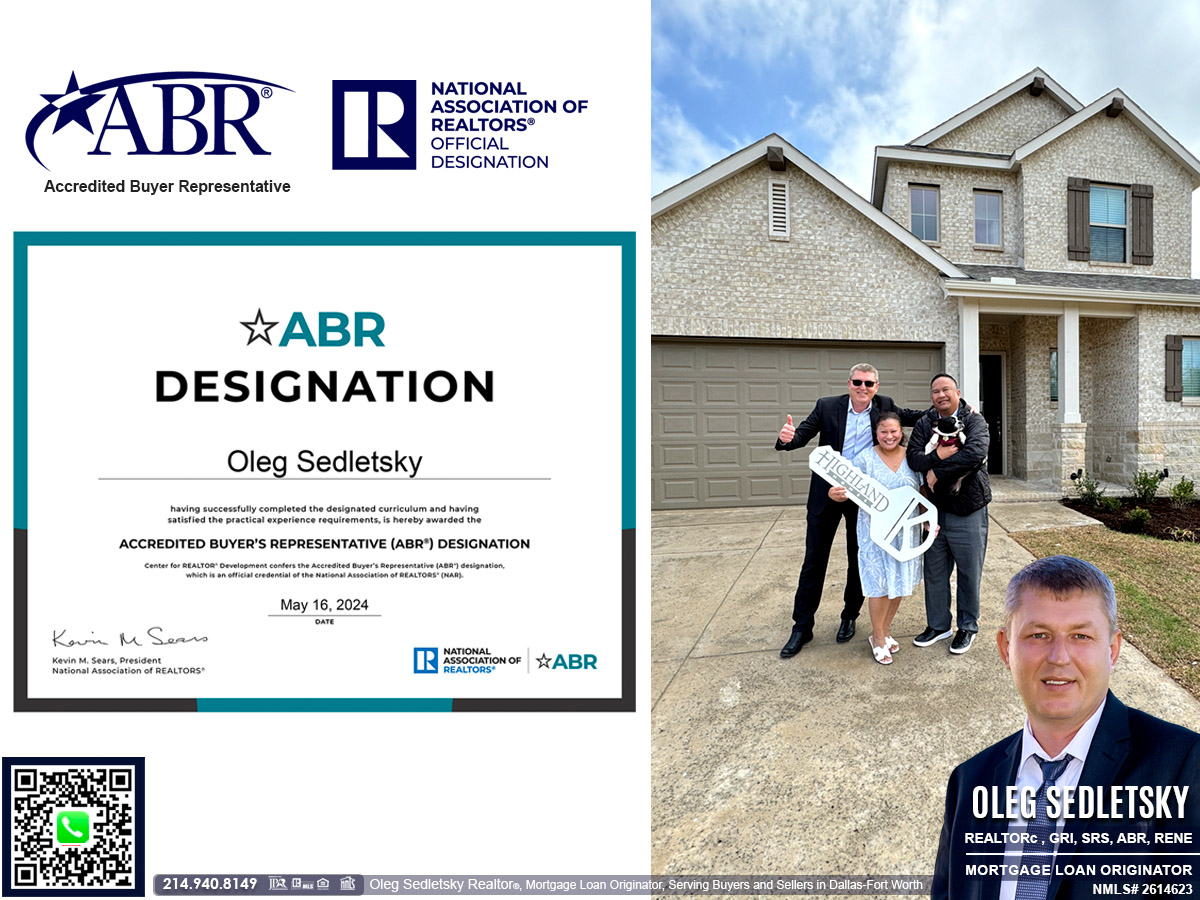
A real estate transaction is a high-stakes financial puzzle with countless moving parts. For first-time buyers, it can feel like trying to navigate a foreign country without a map. This is where your choice of professional guide becomes the most important decision you will make. As a Realtor® with the Accredited Buyer’s Representative (ABR®) designation, I am specifically equipped to lead you through this process with confidence.
What is an ABR® Designation, and who has it?
The ABR® designation is the gold standard for buyer representation. It is awarded by the Real Estate Buyer’s Agent Council (REBAC), a branch of the National Association of REALTORS®, to agents who have completed advanced education and proven their experience in effectively representing homebuyers. When you see Realtor®, ABR® on a business card, you know you are speaking with a specialist.
Here is the advantage you gain by hiring a Realtor® with an ABR® designation:
Specialized Training
My ABR® training was focused exclusively on the buyer’s side of the transaction. I am trained to anticipate challenges, protect your interests, and guide you through every decision point.
Expert Negotiation
Alongside my ABR®, I earned the Real Estate Negotiation Expert (RENE) certification. This means I have advanced skills in crafting strategies to secure the most favorable terms possible for you.
Fiduciary Focus
I only offer full representation because my commitment as an ABR® designee is to be your advocate. My role is to serve your best interests at every turn, from the first showing to the moment you get your keys. I do not just open doors; I open opportunities.
Clarity and Ethics
The ABR® designation requires adherence to a strict code of ethics. My job is to ensure you understand every document and every step, so you always feel empowered, not pressured.
But wait, there is more!
Think for a moment about how many agents you have met with this level of training. My full set of credentials includes: GRI, SRS, ABR®, RENE, and SFR. You can learn about what each of these means for you on my dedicated page READ: My Real Estate Designations and Certifications.
But wait, there is even more! A Mortgage Expert is on your side too!
As a licensed Mortgage Loan Originator, I bring a dual expertise that is rare in this industry. I can guide you not just on the property, but also on the financing that secures it, giving you a powerful strategic advantage.

Why the New Rules Are Good News for Buyers
While change can feel inconvenient, these new regulations bring a level of transparency that empowers you.
No More Guesswork on Fees
In the past, agent compensation was often a mystery to buyers. The Buyer Representation Agreement demands an open conversation about fees from day one. You will know exactly what your agent charges, and the law reinforces that these fees are negotiable.
You Know Who Is on Your Team
Have you ever toured an open house, shared your budget and dreams with the friendly host, only to discover later they worked exclusively for the seller? These new rules eliminate that confusion. Your Buyer Representation Agreement clarifies in writing whether someone works for you or is just unlocking a door.
Defined Services
You get to see precisely what you are signing up for. The agreement acts as a menu of services. If you only want limited assistance, you can sign a limited agreement. If you want a dedicated expert, you sign a full Buyer Representation Agreement. You are in complete control.
4 Tips for Navigating the 2026 Market
As you get ready to enter the market, keep these tips in mind.
1. Do Not Fear the Form
When an agent presents an agreement before a showing, stay calm. Review it carefully, but understand this is the new standard operating procedure. An agent who doesn’t ask you to sign should be a red flag.
2. Check the Expiration Date
Look closely at the contract’s termination date. On a first meeting, you may not want to commit to a six-month term. You can request a shorter period, even just a day or a week, while you decide if the agent is the right fit. Remember, “showing only” agreements cannot exceed 14 days.
3. Ask About Exclusivity
An agreement will state if it is exclusive or non-exclusive. “Exclusive” means you commit to working only with that agent. “Non-exclusive” keeps your options open. A non-exclusive agreement can be a smart choice for an initial meeting.
4. Have the Money Talk Early
Use the agreement as a natural opportunity to discuss compensation. Ask how the agent is paid and discuss the protocol if a seller does not offer to cover the fee. Clarifying this upfront prevents unwelcome surprises down the road.
A Clearer Path to Homeownership
Buying a home is one of the most significant financial decisions of your life. These new rules ensure you are not walking into it with a blindfold on. By requiring written agreements and clear service definitions, Texas is empowering you to make smarter, more confident choices. So get your pen ready. That signature is your first step toward a transparent and protected homebuying experience.








Are you ready to experience the joy of homeownership in the vibrant Dallas-Fort Worth area?
Whether you’re in search of an existing home or a brand-new construction, rest assured that I’m here to assist you every step of the way.
With a dedicated Realtor by your side, the home-buying process becomes a breeze. Say goodbye to stress, and let me handle all the intricate details on your behalf.
Getting the guidance you need is as simple as filling out a brief questionnaire on my Homebuyers contact form. From there, I’ll take care of everything, ensuring a seamless and hassle-free journey towards finding your dream home.
Call/Text 214.940.8149
The Buyer’s Agent Duty
READ: Texas Real Estate Commission Information About Brokerage Services
AS AGENT FOR BUYER/TENANT: The broker becomes the buyer/tenant’s agent by agreeing to represent the buyer, usually through a
written representation agreement. A buyer’s agent must perform the broker’s minimum duties above and must inform the buyer of any
material information about the property or transaction known by the agent, including information disclosed to the agent by the seller or
seller’s agent.
A BROKER’S MINIMUM DUTIES REQUIRED BY LAW (A client is the person or party that the broker represents):
– Put the interests of the client above all others, including the broker’s own interests;
– Inform the client of any material information about the property or transaction received by the broker;
– Answer the client’s questions and present any offer to or counter–offer from the client; and
– Treat all parties to a real estate transaction honestly and fairly.
TO AVOID DISPUTES, ALL AGREEMENTS BETWEEN YOU AND A BROKER SHOULD BE IN WRITING AND CLEARLY ESTABLISH:
– The broker’s duties and responsibilities to you, and your obligations under the representation agreement.
– Who will pay the broker for services provided to you, when payment will be made and how the payment will be calculated.
TYPES OF REAL ESTATE LICENSE HOLDERS:
– A BROKER is responsible for all brokerage activities, including acts performed by sales agents sponsored by the broker.
– A SALES AGENT must be sponsored by a broker and works with clients on behalf of the broker.
Latest from Dallas Real Estate Blog
– Texas Homebuyers Tips, Tricks and Lifehacks
– New Construction Homes in Dallas TX
– Mortgages for Homebuyers and Investors in Dallas-Fort Worth