
Finding the perfect home feels like a victory. You spent weeks scrolling through listings, touring neighborhoods, and debating the merits of open floor plans versus traditional layouts. Finally, you found “the one”, your Realtor submitted an offer, and after some nail-biting anticipation, the seller accepted.
The ink is drying on the paper. The excitement is high. But almost immediately, a new question pops up: “Now what?”
Many buyers feel like they have just stepped off a cliff into the unknown. You went from the fun part of shopping to the serious part of legal documents and large sums of money. This shift can be jarring. Think of the signed contract not as the finish line, but as the moment you buckle your seatbelt for the actual ride.
My name is Oleg Sedletsky, and as a Realtor and Mortgage Loan Originator in Dallas-Fort Worth, I help people navigate this exact moment every day. I see the confusion on buyers’ faces, and my job is to replace that confusion with a clear roadmap.
Let’s break it down and clarify what unfolds after you sign a home purchase contract.

Key Takeaways
If you only have a minute, here is what you need to know about what lies ahead:
- The Offer Becomes a Contract: An offer is just a proposal until the seller signs it. Once they do, it becomes a legally binding document with strict deadlines.
- Your “Test Drive” Window: In Texas, the Option Period is a crucial window for inspections. It is your best chance to uncover issues and decide if you want to proceed.
- Two Tracks: Once the contract is finalized, two separate teams go to work. The Lender handles the money. The Title Company handles the escrow and ownership.
- Closing is a Process: The final phase involves a final walk through, signing a lot of paperwork, and the official transfer of funds and ownership before you get the keys.
Understanding the Roadmap
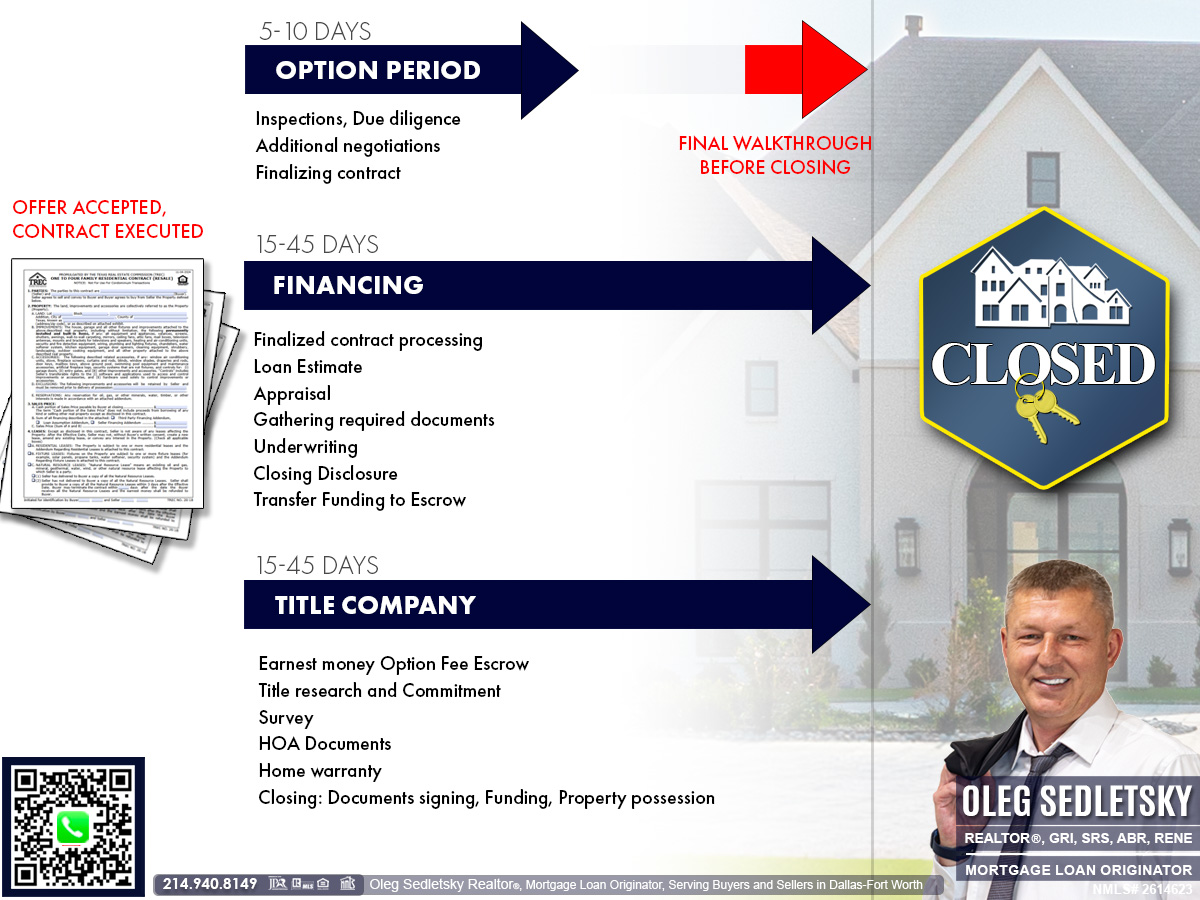
A home purchase contract unfolds in phases. Each one is a decision point, like a fork in the road. Think of it as a “choose your own adventure” book for buying a house. At each step, a condition must be met to move to the next chapter. If it is not, the story might end with the contract being terminated.
Every deal is unique, and this simplified guide describes an average transaction. Your specific purchase might have more or fewer steps.
Phase One: The Offer
People often use “offer” and “contract” interchangeably, but they are very different.
Think of an Offer as a formal proposal. It is you raising your hand and saying, “I would like to buy your house for this much money, under these conditions.”
The Offer is written on a contract form, but at this stage, it is just a one-sided request.
Crucially, without the seller’s signature, the Offer is not a legally binding contract. It is just a piece of paper.
This is why it is smart to give the seller a specific timeframe to accept. If they do not respond by your deadline, you should officially withdraw the offer so you are free to pursue other properties.
Once the seller signs and the contract is executed, copies are sent to the Title company and your lender to get the ball rolling.
Phase Two: The Negotiation Dance
Rarely does a seller look at an initial offer and say, “Perfect, change nothing!”
Usually, we enter a negotiation phase. This is the back and forth tennis match of real estate.
Serve: You submit your offer.
Return: The seller proposes a counteroffer with adjusted terms, like a higher price or a different closing date.
Volley: You review their changes. You can accept them, or you can write a new offer with your own adjustments.
This rally requires skill and strategy. This is where having a Real Estate Negotiation Expert (RENE) certified Realtor on your side is essential. An expert negotiator knows how to structure your counteroffers to protect your interests without killing the deal.
While this rally could go on forever, if both parties are reasonable, an agreement is typically reached within three revisions.
As soon as you and the seller agree on every line item and sign the document, the contract is executed and becomes legally binding.
Phase Three: The Option Period (A Texas Specialty)
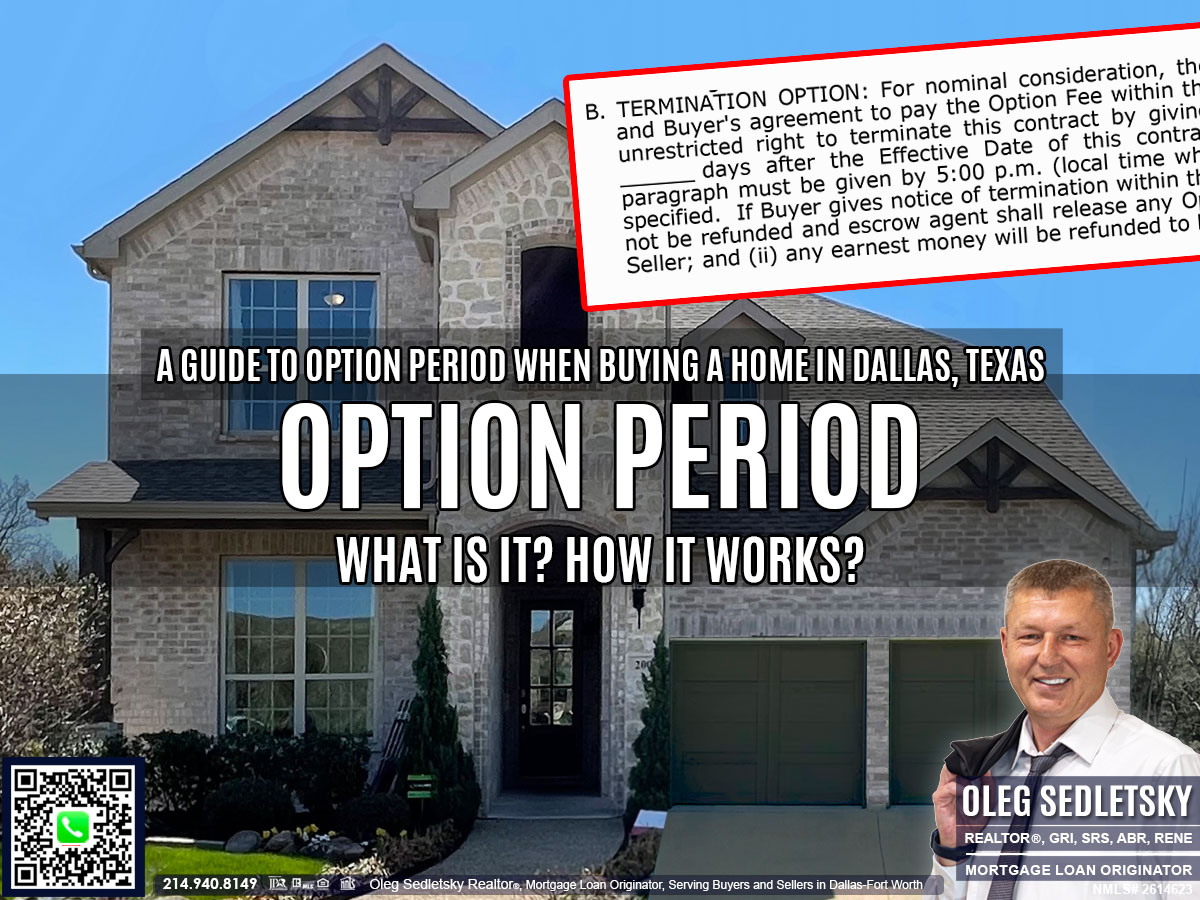
If you are buying in Dallas-Fort Worth, you must understand the Option Period. It is a “Texas thing,” and it is your best friend.
Imagine buying a used car. You would not hand over cash without driving it and having a mechanic look under the hood. The Option Period is your test drive for the house. For a small fee (the Option Fee), you buy the unrestricted right to terminate the contract for a set number of days. During this time, you conduct your due diligence, hiring inspectors to check the roof, foundation, plumbing, and electrical systems.
You hold all the power during these few days. If an inspection reveals a deal breaker, you can walk away, losing only your small option fee.
Read my article about the Option Period to have a better understanding of how it works.
Phase Four: The Second Negotiation (Repairs)
Every home has secrets. Your inspection report will expose them.
Once you have the report, you might enter a second round of negotiations to address any issues that came up. If the roof leaks or the AC unit is on its last legs, you can ask the seller to fix them or give you a credit.
But here is the catch: The seller is not obligated to fix anything. They make their decision based on many factors. While reasonable requests are often considered, a seller can refuse any additional concessions.
If they will not budge, you must decide: do you proceed and handle the repairs yourself, or do you use your Option Period right to terminate the deal?
Phase Five: The Fork in the Road
The Option Period ends in one of two ways. The contract is either terminated or it becomes finalized and firm. At this point, your earnest money is at risk if you back out for a reason not covered by the contract.
Phase Six: The “Backstage Crew” (Lender and Title)
Once the contract is firm, the backstage crew gets to work. This is often the quietest time for you as the buyer, but it is the busiest time for your professionals. Two distinct tracks run at the same time: the Lender (money) and the Title Company (ownership).
The Lender’s Track
If you are getting a mortgage, your loan officer is the captain of this ship.
- Processing: The lender gathers your financial life (tax returns, pay stubs, bank statements). They order an appraisal to ensure the house is worth what you are paying.
- Underwriting: The file goes to an Underwriter, who is the risk assessor. They comb through everything to decide if lending you this money is a safe bet.
- Conditional Approval: The Underwriter often says “Yes, but…” and requests a few more items, like a letter explaining a large deposit. This is standard.
- Clear to Close: These are the magic words! The Underwriter gives final loan approval.
- Closing Prep: The file goes to the closing department to prepare documents, and the final Closing Disclosure (CD) with all your costs is sent to you for review.
The Title Company’s Track
While the lender vets you, the Title Company vets the property’s legal history.
- Escrow: They hold your Earnest Money and Option Fee in a neutral account.
- Research: They examine the property’s history for issues like unpaid taxes, liens, or ownership disputes.
- Documentation: They order HOA documents and a survey to verify property lines.
- Clear Title: They work to resolve any issues found during their research to ensure you receive a clear title.
- Closing Disclosures: They prepare and send out the final numbers to all parties.
Phase Seven: The Grand Finale (Closing)
The finish line is in sight. Before closing day, you will conduct a final walk-through to verify the property’s condition is as promised. Then, you head to the closing table.
Closing is a choreographed exchange:
- Funding: The lender transfers the loan funds to the Title company’s escrow account.
- Signing: You and the seller sign all the necessary documents. Your hand will probably cramp; it is a rite of passage.
- Verification: The Title company verifies that all paperwork is complete.
- Disbursement: Funds are transferred to the seller.
- Keys and Ownership: You get the keys, and the transaction is officially recorded with the county registrar. The house is finally yours!

Why Who You Work With Matters
Real estate transactions are complex systems where a single missed deadline or a misunderstood clause can be costly.
This is where I offer a unique advantage. I am both a Realtor and a Mortgage Loan Originator.
Most professionals only see half the picture. A Realtor sees the house and the contract, while a Loan Officer sees your income and credit score. I see the entire board. I understand how a repair negotiation could affect your loan approval and how a contract clause impacts your closing costs. When you work with me, you do not have to worry about the left hand not talking to the right hand. I am both hands, guiding you through the property hunt and the financial maze simultaneously for a smoother path home.
Ready for the Next Step
The period after signing a contract is intense, but it is also exciting. It is the bridge between “I hope” and “I own.”
We move from the abstract idea of a home to the concrete reality of keys in your hand. There will be paperwork. There will be decisions to make. But you will not be making them alone.
If you are ready to start this process, let me be your Realtor. I will guide you through the home buying or selling journey every step of the way. Contact me today!
Unlock Exceptional Service: Get in Touch with Me Today
Assistance with all your real estate needs in the Dallas-Fort Worth area is just a click or call away. Reach out at 214-940-8149 or connect through the links below.
CRITICAL NOTE
A Home Purchase Contract is a legally binding agreement between the buyer and seller of a property. It states the terms and conditions of the sale, including the price and any contingencies that must be met for the sale to go through. It’s crucial to thoroughly review contract and seek legal advice if necessary to ensure you’re fully aware of your rights, obligations, and any potential exclusions before you sign.
Hey Home Buyers! Are you excited to experience the joy of homeownership in the vibrant Dallas-Fort Worth area?
Buying a home in the Dallas-Fort Worth area should feel exciting, not overwhelming. Whether you’re eyeing a charming pre-owned house or a fresh new build, I’m here to make the home buying process simple and straightforward.
I’ll be here to answer your questions, handle the details, and make sure everything falls into place. My goal is to help you buy a home that checks all the boxes for you.
Let’s get started. Fill out my quick Homebuyers contact form and I’ll take it from there.
Check out my other articles for more helpful information about the home-buying process.
For many, buying a home for the first time can seem like a daunting task. Rest assured, it doesn’t have to be, and I’ve got you covered! Being a confident home buyer starts by understanding the simple basics and increasing your awareness of what to expect during the home buying process. Once you become an informed first-time homebuyer, you will reduce your stress, increase your confidence, and be one step closer to owning your first home.
Get your home buying jump-start right now by checking out my other articles linked below.
– The Process Of Buying A House in Dallas Texas
– How Long Does It Take To Buy A House in Dallas?
– Professionals You Deal with When Buying a House
– 6 Reasons Why You Need A Realtor® To Buy A Home In The Dallas Area
– Pre-qualified vs Pre-approved
– What Documents Do You Need To Apply For A Mortgage?
– Do’s and Don’ts After Applying for a Mortgage
– What Happens Next After You Sign a Home Purchase Contract?
– Closing on a Home in Dallas Texas – What to Expect and How it Works. Step-by-Step Guide
–
Latest from Dallas Real Estate Blog
– Texas Homebuyers Tips, Tricks and Lifehacks
– Mortgages for Homebuyers and Investors in Dallas-Fort Worth
The Buyer’s Agent Duty
READ: Texas Real Estate Commission Information About Brokerage Services
AS AGENT FOR BUYER/TENANT: The broker becomes the buyer/tenant’s agent by agreeing to represent the buyer, usually through a
written representation agreement. A buyer’s agent must perform the broker’s minimum duties above and must inform the buyer of any
material information about the property or transaction known by the agent, including information disclosed to the agent by the seller or
seller’s agent.
A BROKER’S MINIMUM DUTIES REQUIRED BY LAW (A client is the person or party that the broker represents):
– Put the interests of the client above all others, including the broker’s own interests;
– Inform the client of any material information about the property or transaction received by the broker;
– Answer the client’s questions and present any offer to or counter–offer from the client; and
– Treat all parties to a real estate transaction honestly and fairly.